Country

USA
Language

English
Account

Login


The Blood of Dawnwalker. What the reviews say after launch
09/03/2026
«Stutters worse than me attempting irl social interaction».
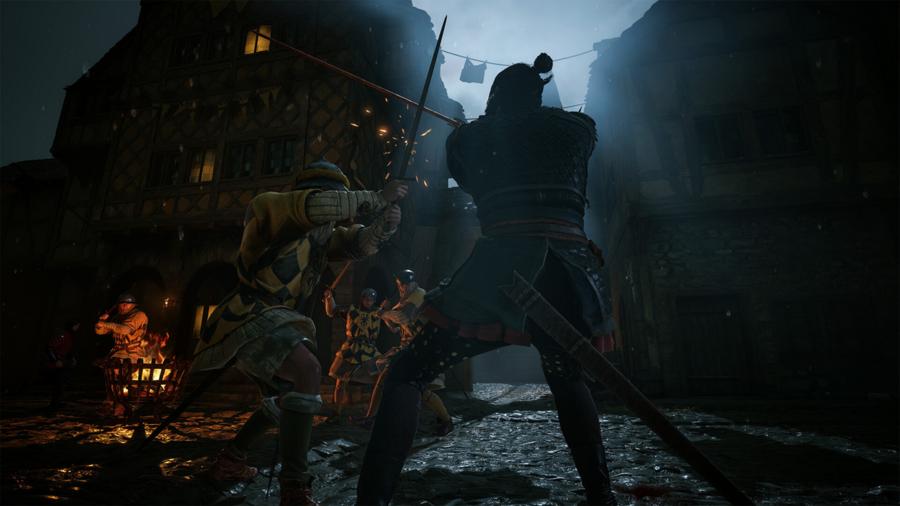
The vampire RPG The Blood of Dawnwalker arrived on Steam on 3 September. The first day already has more than two thousand reviews, and roughly three out of four are a thumbs up. We went through them and wrote down what people praise and what they can't stand.
About the game
You play Coen in the medieval valley of Vale Sangora. The local vampire lord took his family, and Coen is trying to get them back. By day he is human, by night a vampire: the fighting changes, and so do the roads you can take. Time is short. The in-game days run out, quests eat hours, and you have to decide what to do today and what can wait.
What they like
- Story and characters.
This comes up more than anything else. People say the story holds from the prologue, the dialogue is not empty, and Coen is not cardboard. They want to listen to the conversations, not skip them. That pulls them in harder than the combat itself. - Quests in the Witcher mould.
The game gets compared to The Witcher 3: Wild Hunt constantly. Not because of the look, but because a simple errand peels off the road and grows into a story of its own. Anyone who wanted that kind of writing finds it. Anyone who wanted the same combat as The Witcher walks away unhappy. - The vampire world.
Plague, the church, blood instead of tax, a lord who drinks from the people who live there. The setting gets praised on its own, apart from the systems: dark, dense, no cheap gloss. For some of them this is the best vampire RPG in years. - Human by day, vampire by night.
Witchcraft in daylight, fangs after dark, and it is not a switch in a menu. They write that at night they want a different road and a different fight. For a lot of people that is the whole game. - Combat with four directions.
Once it clicks, they praise it: you have to catch the block and the hit on the right side, not mash one button. On high difficulty they say the fight feels alive and asks for attention. On a gamepad and on a keyboard the same system is often the complaint. - The day limit.
Some of them like it. Time does not stop you walking the map, it makes you pick which quest eats the morning. Side jobs tie into the plot, and morning and evening change what you can still finish. Anyone who wants to do everything in one run hates a clock like that. - The music.
They put it next to the story, not under it as wallpaper. The mood sits close to The Witcher, Coen's voice is good, and the valley is nicer to be in because of that. - Poking around.
They praise the open world because you can leave the road and find someone else's quest, not an empty marker, and it later echoes in the plot. For a lot of them walking Vale Sangora is not a break between jobs. It is how you work out how the valley lives.
What they don't like
- How it runs.
This is the loudest knock. Stutters, sudden frame drops, DLSS that helps or does not, crashes, a long shader compile on first launch. One person is fine on a strong PC, the neighbour with a similar GPU is already a mess in the open world, which only makes people angrier: so it is not just the hardware. Cutscenes often sit at thirty frames, lips miss the speech, and ultrawide monitors get black bars at the edges. - The walking.
The character suddenly drops out of a run into a walk, especially if you ease the stick off centre. Indoors the controls float, turns feel heavy. The studio tells you to use a gamepad, and most of the walking complaints are about the gamepad. - Fiddly combat.
The same four directions other people like get called awkward here. On a pad you hit the way you walk, so it feels like you are looking one way and moving another. On a keyboard the layout feels ported from a pad: block, strike, skills and items smeared across the keys, and two enemies is already too much to keep up with. They also write that enemies soak too much and fights drag. - The controller.
An Xbox pad works. DualSense on PC does not, and the prompts on screen are Xbox icons. The stick has a deadzone on top of that: you run, nudge left, and stop. Anyone on PC with a PlayStation pad suffers for it. - No Russian localisation.
A chunk of the thumbs-down pile is exactly this, and it pulls the overall Steam score down. Those reviews do not even ask for a Russian voiceover. They want the words on screen. The game is sold where millions of people read Russian, the dialogue is dense, and without a translation those players bounce before the story has a chance. - Not enough hours.
The same day system others praise is unbearable here. Fetching medicine for your mother eats hours, and the map is still full of jobs. They write that they watch the clock in a conversation, not the line itself, and the open world shrinks because of that. - A vampire without blood.
On Japanese Steam the story is cut: almost no blood, take a shirt off and there is another shirt underneath, and sometimes you cannot even switch language. For a vampire game that kills the tone. On the rest of Steam the blood is there, but the complaint still shows up immediately. - Launch niggles.
Mouse sensitivity resets after a cutscene even though the number in the menu stays the same. The camera lags a second after you crouch. Saves drag graphics settings over from another PC. Next to the performance that is not the main wound, but it is enough to make the launch feel unfinished.
What the reviews leave behind
Steam has the game in the plus column, but nobody agrees. One side likes the story, the night fangs, the quests that pull you off the road. The other walks into the valley, hits a frame drop, stops dead on a stick nudge and votes it down even though they liked the prologue.
The story and the day-to-night split are what people actually praise. What lands badly is how it shipped: the performance, the walking, the controller. Until those get fixed, the argument is not about vampires. It is about whether you can finish the story they are praising.
Might be interesting
The Blood of Dawnwalker got hotfix 1.0.4
9 сентября
Mortal Shell II got adaptive difficulty
6 сентября
The Blood of Dawnwalker passes a million sales in two days
6 сентября
Crimson Moon: pretty, and it winds you up
4 сентября

Final Fantasy VII Revelation comes out April 8, 2027
4 сентября
Crimson Desert: Charting the Unknown comes out on 15 October
3 сентября
The remake of the first Witcher has taken a back seat
3 сентября
The remake of the first Witcher has taken a back seat
3 сентября
The Witcher 3: Wild Hunt owners get the remaster for free
3 сентября
Latest News
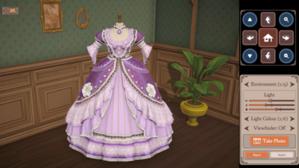
Dressmaker: player reviews
Dressmaker: player reviews
“I literally feel like I'm back in my Textiles class in High School... your old teacher is gonna pop out of no where and go: ‘WHY DIDN'T YOU SEW LIKE THIS WHEN YOU WERE MY STUDENT?!’”. The sewing workshop simulator Dressmaker launched on Steam on 21 September. Of its 686 reviews, 96% are positive. We went through what players wrote to find the qualities they value most and the problems that hold the game back.
09/22/2026
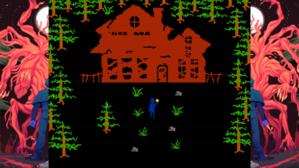
FAITH: The Unholy Trinity is 75% off
FAITH: The Unholy Trinity is 75% off
The pixel horror game FAITH: The Unholy Trinity is 75% off on Steam through 25 September. It has never had a larger discount.
09/20/2026
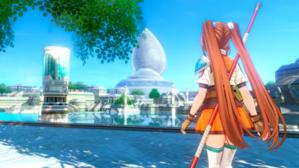
Trails in the Sky 2nd Chapter through players' eyes
Trails in the Sky 2nd Chapter through players' eyes
«Came for Estelle. Stayed for Estelle. Now suffering because of Estelle». JRPG Trails in the Sky 2nd Chapter arrived on Steam on 17 September and drew more than 800 reviews in three days, with about 97% of them positive. We read all 807 reviews available at the time and gathered the remake's main strengths and weaknesses.
09/20/2026

FINAL FANTASY VII REMAKE INTERGRADE is 75% off
FINAL FANTASY VII REMAKE INTERGRADE is 75% off
Steam has the action RPG FINAL FANTASY VII REMAKE INTERGRADE at 75% off until 1 October. The game has never had a larger discount.
09/19/2026

Anime Shop Simulator: review roundup
Anime Shop Simulator: review roundup
«not my game, im just working a 9-5 job at the cashier». Anime merchandise store sim Anime Shop Simulator arrived on Steam on 11 September. It picked up more than 700 reviews in its first week, with about 75% of them positive. We went through the reviews to find out why running the shop is so absorbing and what keeps the business from working smoothly.
09/19/2026
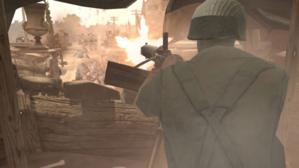
Company of Heroes is 80% off
Company of Heroes is 80% off
Steam has the real-time strategy game Company of Heroes at 80% off until 1 October. It has never had a larger discount.
09/18/2026